


TL;DR: Export your transactions from Xero (Reporting → Account Transactions) as an Excel spreadsheet, then upload it to AbraTax and submit to HMRC.
Here's the thing: If you're a sole trader or landlord using Xero, you're probably paying for a lot of features you don't need and may never have needed. MTD Income Tax doesn't require full accounting software. It doesn't require receipt scanning, bank feeds, or a dashboard showing your cash flow. HMRC just needs your records kept digitally and submitted through compliant software. A spreadsheet does that. AbraTax bridges the gap between your spreadsheet and HMRC. That's it. Here's how to get your records out of Xero and be fully MTD-compliant.
What MTD actually requires:
Under Making Tax Digital for Income Tax HMRC requires that you:
- Keep your income and expense records in a digital format.
- Submit quarterly updates and a final declaration through HMRC-recognised software.
That's the full list. No receipt scanning, no cloud accounting, no bank reconciliation, just digital records submitted the right way.
AbraTax is HMRC-recognised bridging software, which means you can keep your records in a spreadsheet and submit directly from there. Simple!
How to Export Your Records from Xero:
Xero makes it straightforward to export your transaction data. Here's where to find it.
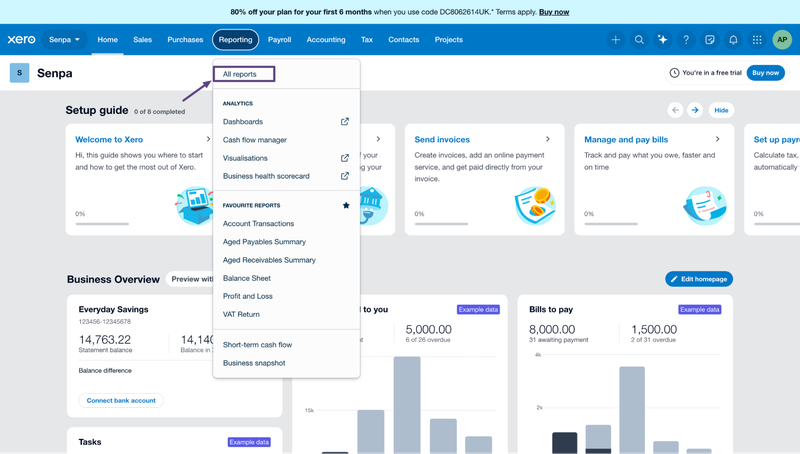
1.Go to Reporting in the top navigation bar and select all reports from the drop down menu.
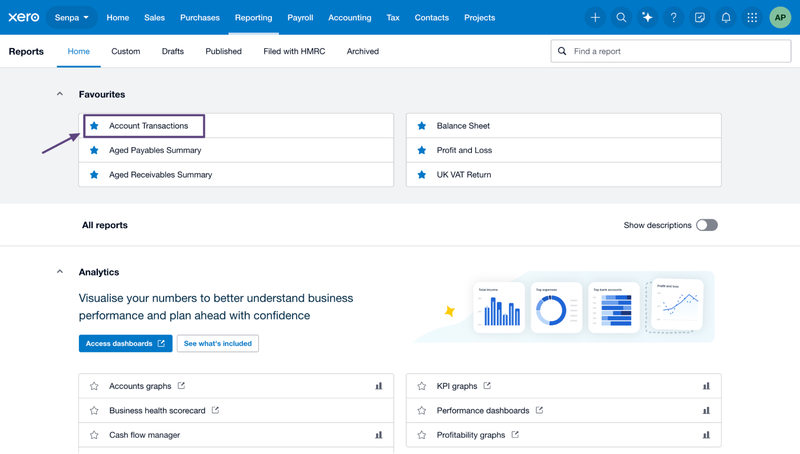
2. Click Account Transactions. It appears under Favourites at the top of the Reports page.
3. Set the Date range to cover the tax year you want to export.
4. Click Update to load your data.
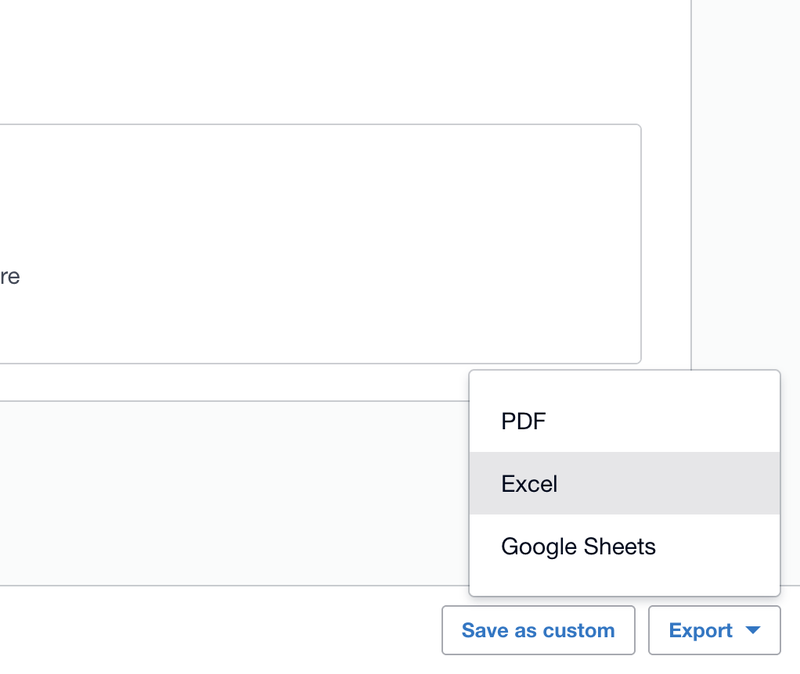
5. Click the Export button in the bottom right corner.
6. Select Excel from the drop-down. PDF and Google Sheets are also available.
Your transaction records will still download as a spreadsheet organised by account. Repeat for each tax year you want to keep on record.
Optional: Saving your Receipts.
If you've been scanning receipts in Xero and want to keep copies, you can export those too, though this isn't required for MTD compliance. If you do want to keep them, we'd suggest organising them into folders by tax year (example 2024-25, 2025-26) and saving them as a zip file alongside your spreadsheet records. This keeps everything tidy and easy to find if HMRC ever asks.
You're done
Once you've exported your records. You've got everything you need. Open AbraTax, upload a spreadsheet, and you're ready to submit your quarterly updates to HMRC. No complicated migration, no data transfer, just a spreadsheet and software that actually does what you need.